
‘Restoratif’
Food is something that has always had the power to heal and restore us – Whether we crave the nutritional content of the food or possibly just the form of it’s presentation.. The food that we choose to eat, particularly when we aren’t feeling 100% really does show the essence of us, the things that have created us and have contributed to who we are today.
The ‘Restoratif’ project takes inspiration from the 18th century French street food sellers who developed simple soups, stews and ‘bowls’ to ‘restore’ and heal their clientele. The simple fundamental elements of the food that we choose when we are in need of healing often resembles the food that we consumed in the past.
After discussing this point with a range of different people, it is quite interesting to see that whilst there are distinct differences in the options chosen when they are in need of ‘healing food’, there are some very distinct similarities too.
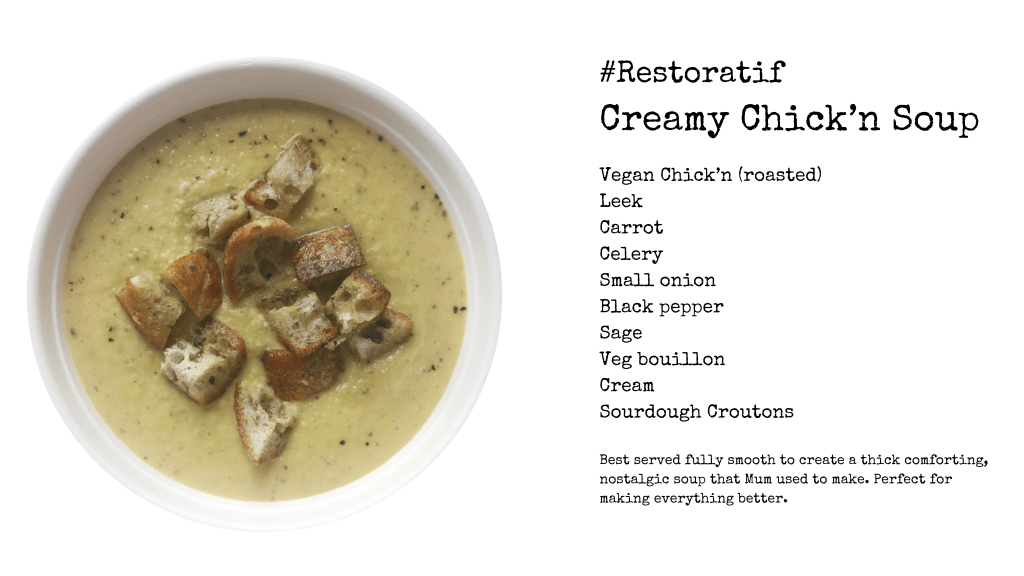
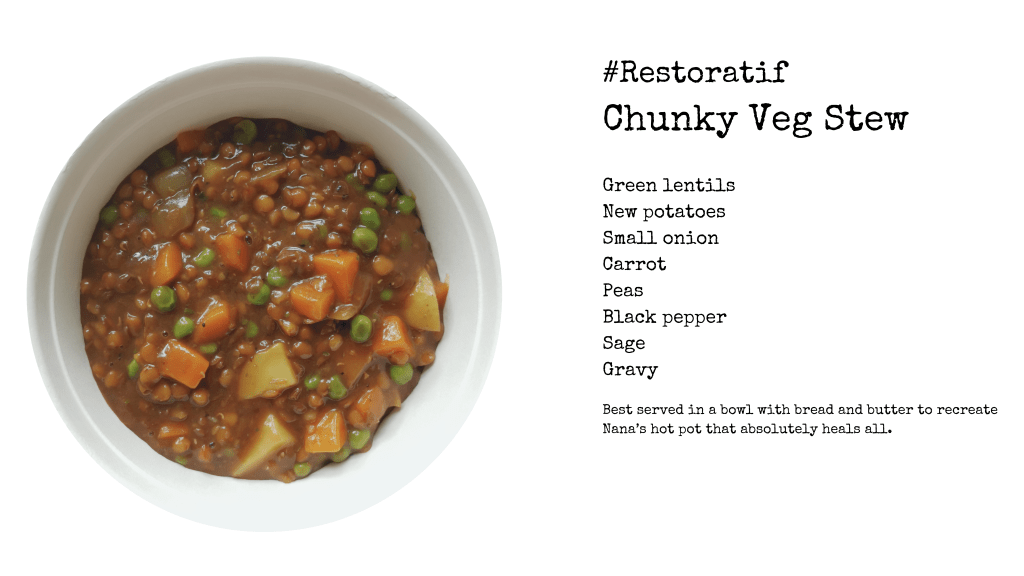
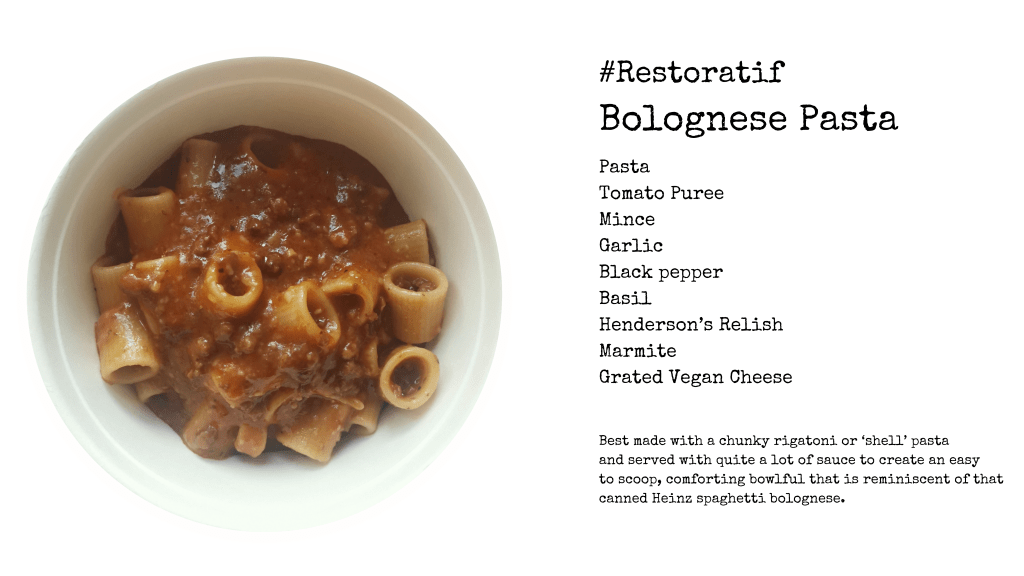
The bowls below represent a cross section of the the ‘Restoratif’ preferences from the project – The key ingredients are outlined alongside any particular comments relating to the serving suggestions (which are quite often linked to maternal family members) and are more often than not, always in the form of ‘easy to eat’ meals with just a simple spoon enabling the restorative power of food to be dispensed with ease on the sofa, under a warm blanket in front of a comforting box set binge.
The food that heals us has roots in our early childhood memories, the nursery food that first introduced us to solids and provides a comforting texture that helps to ease our ills in adulthood.
The nutritional content of the food that we choose is seemingly wholesome, mostly veg focused and packed with vitamin rich ingredients – It is the bowl and ease of consumption that is the constant though.
Restorative food should be wholesome, in a bowl, eatable with a spoon under a blanket and based on the food that we were fed in our formative years to heal us.





 www.greensandgoodstuff.com